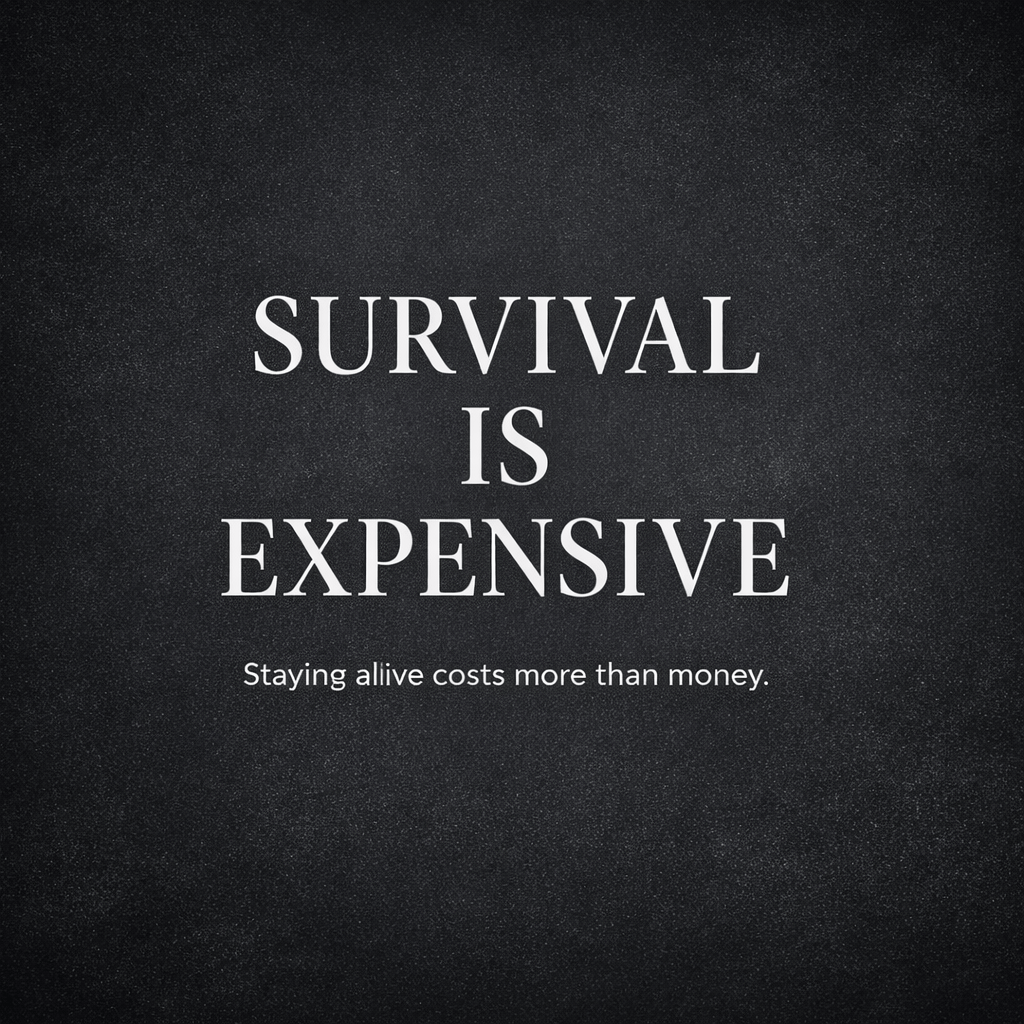
No one tells you how expensive survival is.
Not just financially—though that part is brutal—but emotionally, mentally, relationally. Staying alive costs more than money, and the bills don’t stop coming just because you didn’t ask for this life.
There’s the obvious stuff. Appointments. Prescriptions. Scans. Parking garages that charge like you’re visiting a luxury destination instead of an oncology floor. Insurance premiums that feel insulting considering how much you still pay out of pocket. Bills that arrive months later, long after the pain of the procedure has faded, reopening something you were trying to close.
But that’s the part people can understand. Numbers make sense to people. Receipts make suffering legible.
What no one talks about is the invisible cost.
The cost of planning your life around energy you don’t have yet.
The cost of canceling again.
The cost of apologizing for being unreliable when your body is the unreliable one.
Survival is expensive because it demands constant negotiation. With your body. With your time. With your relationships. With your sense of self.
It costs friendships. Not all at once—quietly. Slowly. People don’t leave because they don’t care. They leave because chronic illness doesn’t fit neatly into normal life. Because there’s no clear end point. Because “How are you?” stops being a simple question when the answer never really changes.
Survival costs independence. It costs spontaneity. It costs privacy. It costs the version of yourself who didn’t have to think about medication schedules or symptom trade-offs or whether today’s strength needs to be saved for tomorrow.
It costs trust in your own body.
And still—you pay it.
Because the alternative isn’t an option you get to consider lightly.
People love to say, “At least you’re alive.”
As if survival is free.
As if staying alive doesn’t require constant sacrifice.
As if gratitude cancels out exhaustion.
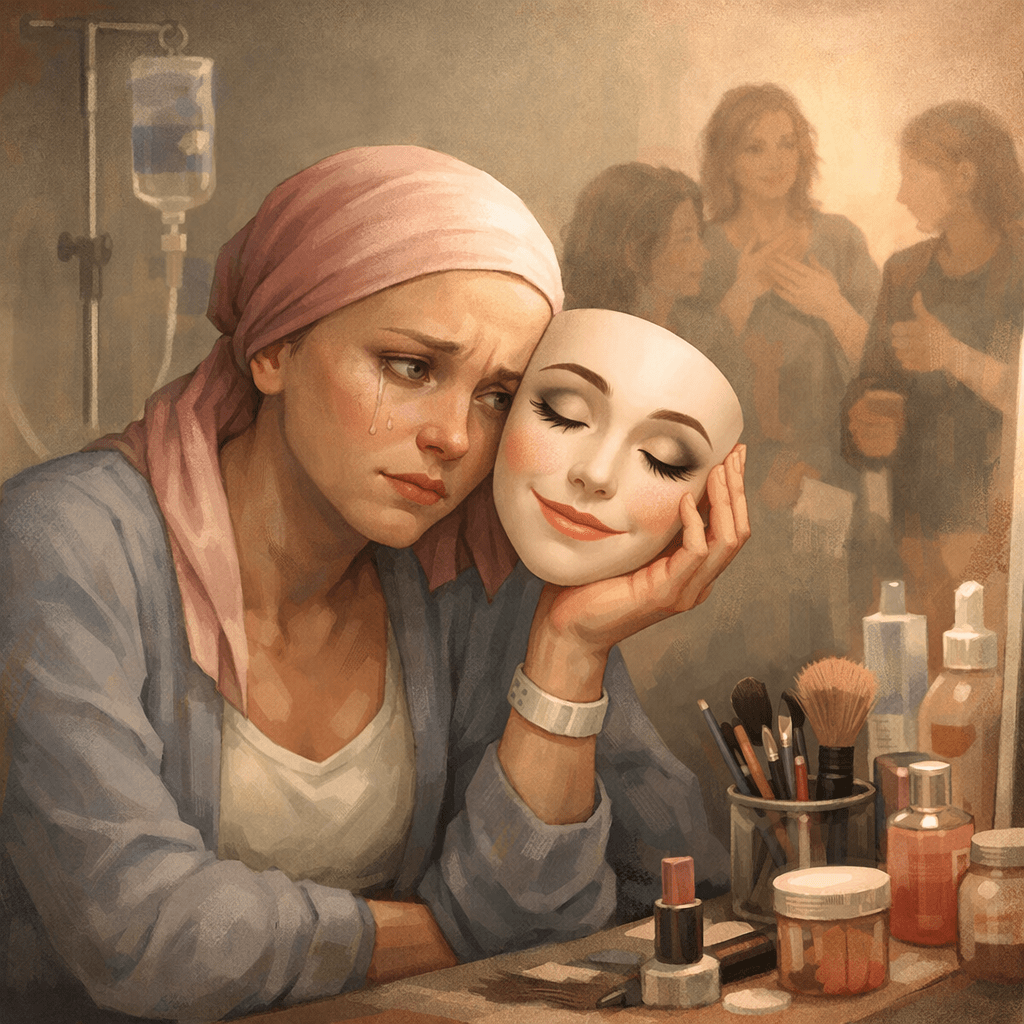
I am grateful. And I am tired.
Both things are true.
Survival is expensive because it asks you to keep going even when the return on investment feels unclear. It asks you to keep showing up to a life that looks nothing like what you planned, and to pretend that adaptation doesn’t come with grief attached.
There are days I feel strong.
There are days I feel lucky.
And there are days survival feels like a bill I didn’t agree to but have no choice but to pay.
That doesn’t mean I want out.
It means I want honesty.
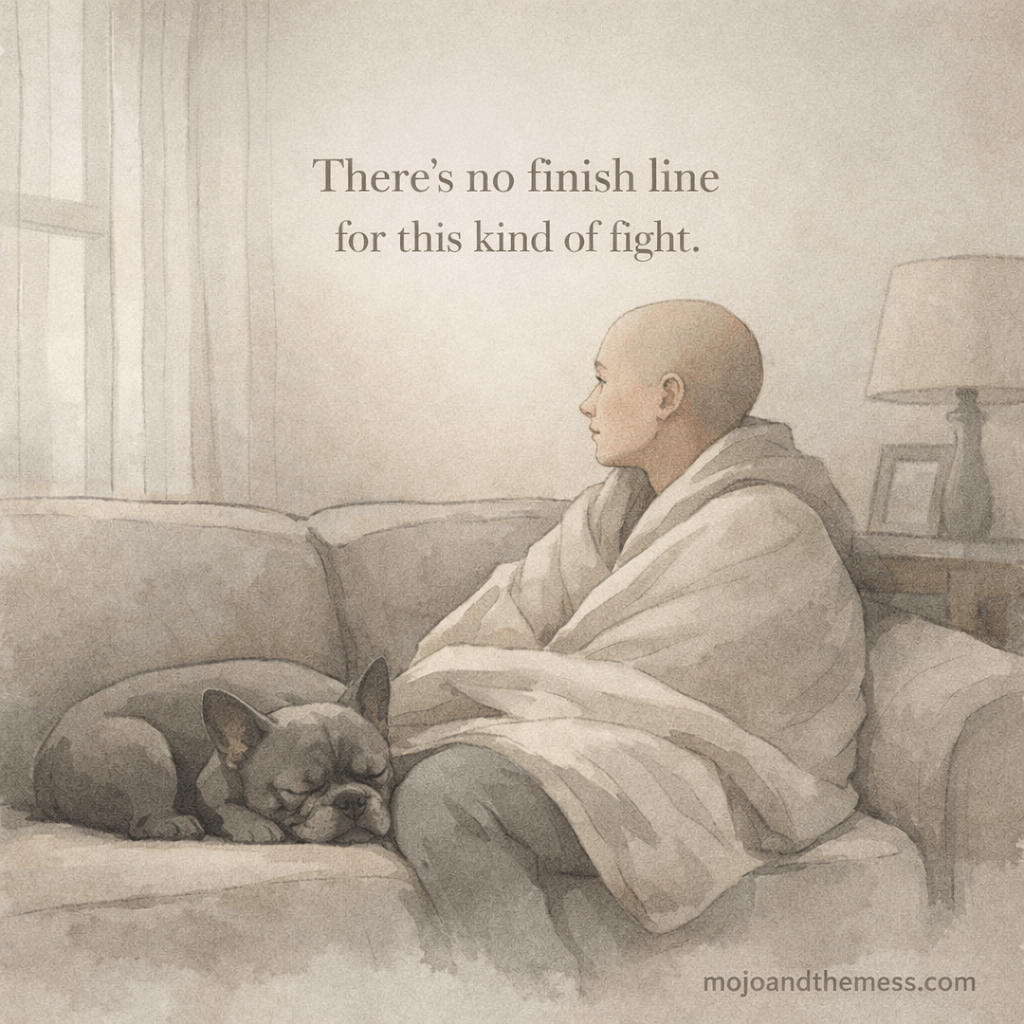
Because surviving isn’t just about staying alive.
It’s about what it costs to do so.
And that deserves to be named.
Subscriber Note
If this resonated, you’re not alone—even if it feels that way most days. I write here about the parts of illness people don’t always say out loud: the quiet grief, the long middle, the cost of continuing.
You can subscribe to get new posts by email when they go live. No pressure, no noise—just honest writing, sent gently, when there’s something worth saying.
Thank you for being here.



Leave a comment