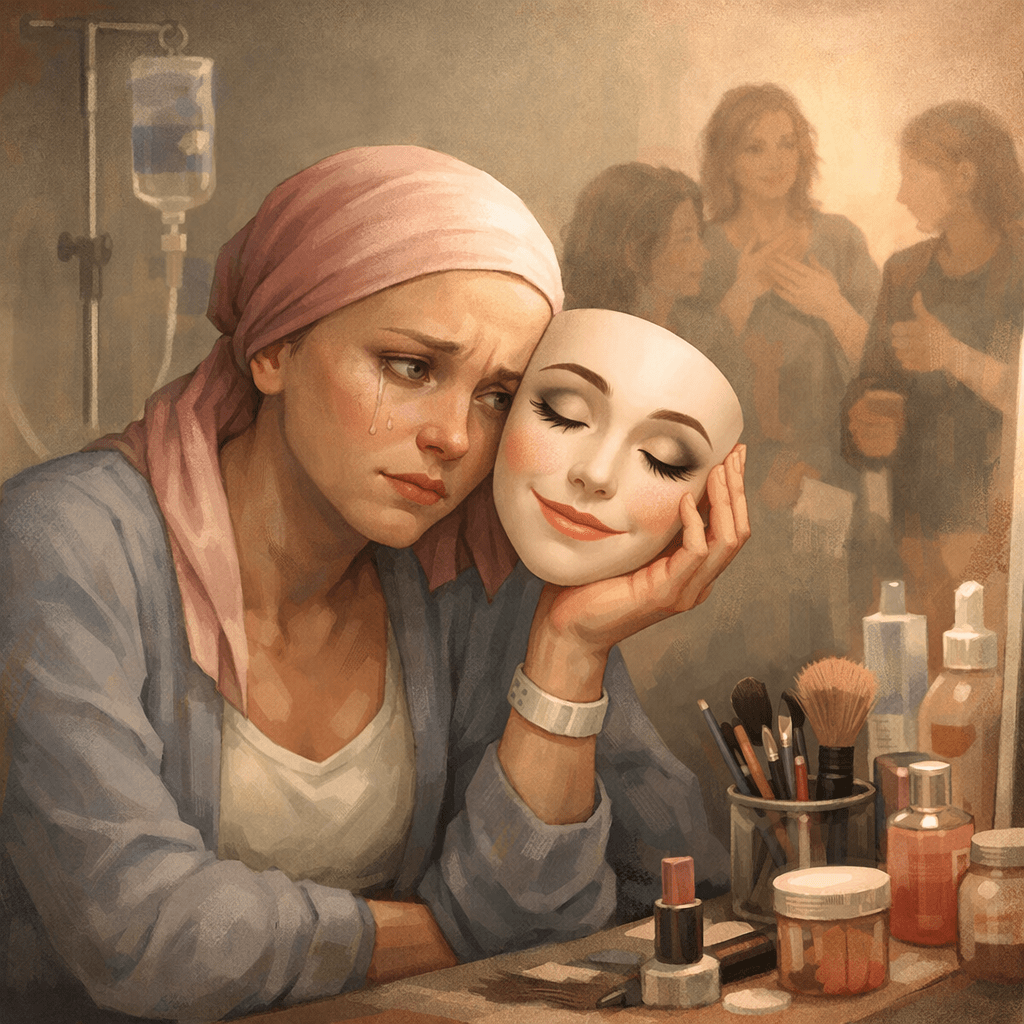
There’s an unspoken rule that women with cancer are supposed to be graceful about it.
Not loud.
Not angry.
Not messy.
We’re supposed to be brave in a quiet way. Polite about our pain. Appreciative of every gesture. Put together enough to reassure everyone else that this isn’t too uncomfortable to witness.
Cancer, apparently, is acceptable — as long as we carry it attractively.
I didn’t realize how heavy that expectation was until I started feeling like I was failing at it.
Because some days I’m not strong. I’m not inspirational. I’m not calm or optimistic or grateful for the lesson. Some days I’m irritated, exhausted, bloated from steroids, sore in places I didn’t know could hurt, and completely uninterested in being a palatable version of sick.
But that’s not the version people expect from women.
They expect softness.
They expect composure.
They expect us to manage their feelings while we’re managing our own bodies.
I’ve noticed how differently women are responded to when we’re sick. When we express fear or anger or frustration, it’s often softened by others — reframed, redirected, or minimized. We’re told to stay positive. To be strong. To keep our spirits up. To remember that others have it worse.
Men are allowed to be blunt. Women are encouraged to be graceful.
Even in medical spaces, the expectation follows us. Explain your pain calmly. Advocate without being “difficult.” Ask questions, but don’t push too hard. Be informed, but not emotional. Take control of your care without stepping outside the role of the agreeable patient.
There’s a narrow window of acceptable behavior, and it’s exhausting to stay inside it.
What no one talks about is how much effort that performance takes.
It takes energy to look okay when you don’t feel okay.
It takes restraint to soften your language so people don’t feel uncomfortable.
It takes self-control to swallow frustration when your body is doing things you can’t fix.
And when you slip — when you cry too hard, snap too sharply, or admit that you’re not handling it well — there’s often a quiet shift. A discomfort. A sense that you’ve broken the illusion.
That illusion is a burden women carry quietly.
Because underneath the expectation of grace is something darker: the idea that our suffering should still be pleasing. That our illness should still be consumable. That we should make cancer easier for others to look at.
I don’t want to be graceful anymore.
I want to be honest.
I want to say that cancer is ugly sometimes. That it makes me tired in a way rest doesn’t fix. That it changes how I see my body and how safe I feel inside it. That it makes me less patient, less filtered, less willing to pretend.
None of that makes me weak.
None of that makes me ungrateful.
None of that makes me “doing it wrong.”
It makes me human.
Women don’t need to carry cancer gracefully.
We’re already carrying enough.
If you’re reading this and feeling like you’re failing at being the “right kind” of sick — you’re not. You’re just done performing. And that’s allowed.
If this resonated with you:
You’re not alone here. Mojo and the Mess exists to talk about the parts of illness women are expected to swallow quietly. There’s no pressure to be strong, positive, or graceful — just honest.
You can explore the Resources and Support tabs if you’re looking for practical help, or subscribe if you want these conversations delivered gently, when you have the energy for them.
We’re allowed to take up space — even like this.



Leave a comment