There’s a silence in oncology waiting rooms that’s different from any other place I’ve ever been. It’s not peaceful. It’s not quiet in the meditative, spa-music kind of way. It’s the kind of silence that buzzes under your skin. Like everyone in the room is holding their breath at the same time — and no one knows when it’s safe to exhale.
No one warned me about this part. Not the doctors. Not the pamphlets. Not the blogs. They talk about chemo, side effects, losing your hair, nausea, surgery — but not the space in between.
The waiting.
SITTING WITH THE UNKNOWN
You walk in, check in at the front desk with a quiet “Hi, I’m here for my labs,” and you’re handed a clipboard or told to sit.
And so, you sit.
The chairs are always too firm or too soft. The air is either freezing or still. There’s a rack of outdated magazines — old issues of Golf Digest and Better Homes & Gardens, like those will distract anyone from the reason we’re here.
Your mind becomes a war zone. You try to focus on your phone, but end up rereading the same sentence ten times. Your brain floats between a million possibilities: Will my counts be good enough for treatment today? Did the scan show progression? Will I need another surgery? Am I getting better? Am I getting worse?
This room holds too many questions. And too few answers.
THE PEOPLE ACROSS FROM YOU
There’s always a woman across from me. Not the same one, but always someone — another patient, bundled in a blanket or fidgeting with a hospital bracelet. Our eyes meet, just briefly. It’s a mutual nod of recognition. Of exhaustion. Of I see you.
And then we both look away.
It’s not rudeness — it’s survival. We’re all doing our best to stay inside our own heads because letting someone else’s grief in might crack us open completely.
THE FAMILIAR FACES
After a while, you begin to recognize the others.
There’s the older man who always helps his wife into the same chair near the window, her head wrapped in a pink scarf. He carries her snacks in a grocery tote like it’s sacred cargo.
The young guy in scrubs who looks too healthy to be here — maybe he’s just starting, maybe he’s still pretending it’s all fine.
The little girl with the backpack and IV pole that makes you want to scream at the universe.
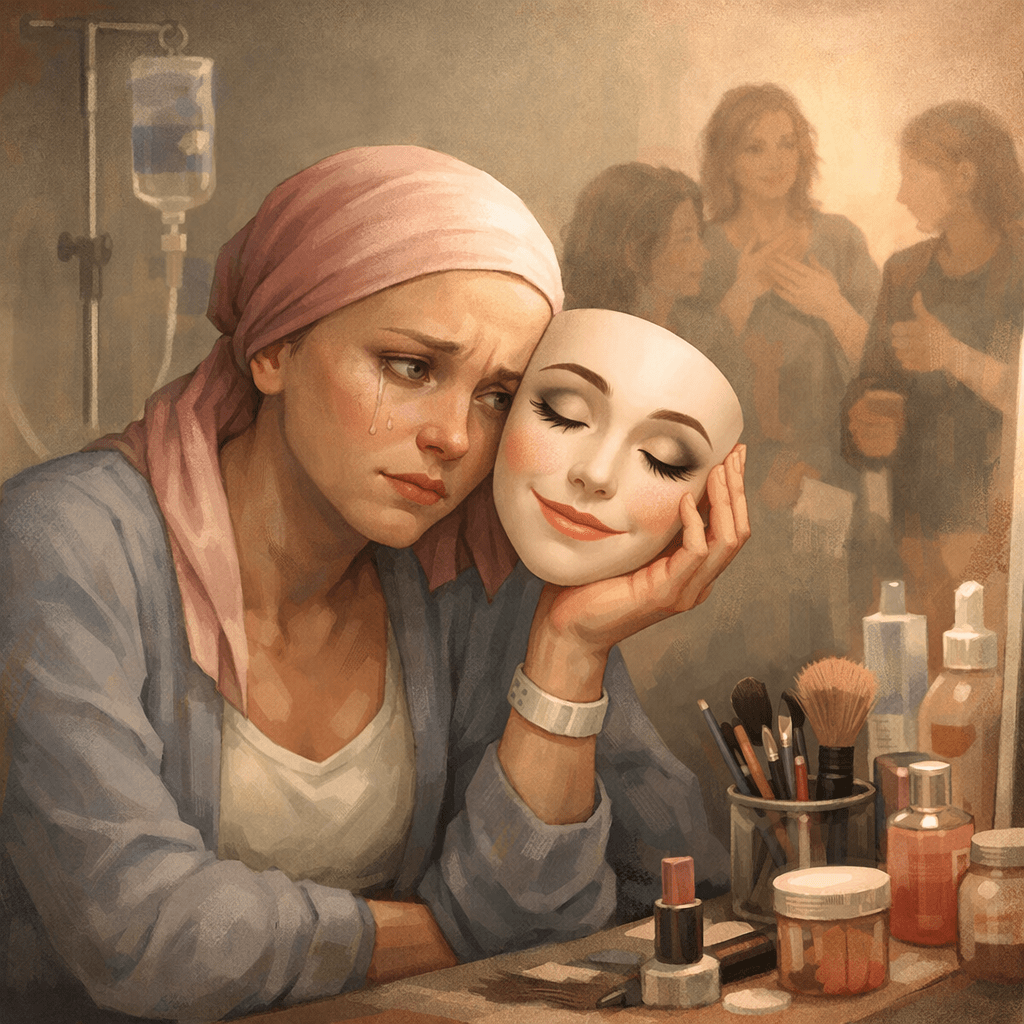
And the woman who always puts on lipstick before treatment — her version of armor, I think.
You never know their names. But you notice when they’re not there. And when someone disappears for too many weeks, you pretend you don’t notice. Because the alternative — wondering why — is too heavy.
MOJO’S MAGIC
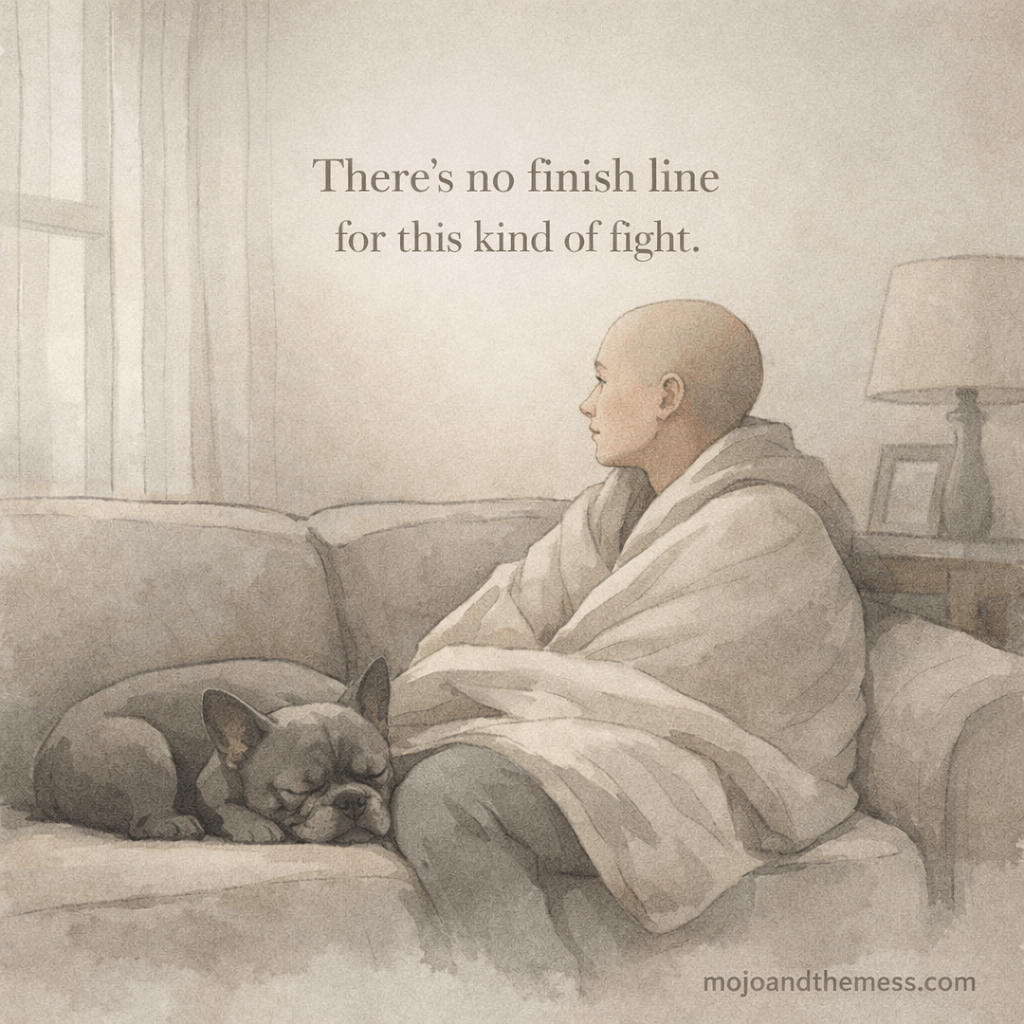
When Mojo’s allowed to come with me, everything shifts.
He doesn’t fidget or worry. He doesn’t care what the labs say or how long we’ll be here. He just lays on my feet, breathes slowly, and reminds me to exist right now.
I watch people soften when they see him. Nurses bend down to scratch behind his ears. Even the grumpiest-looking patient cracks a smile. He brings normalcy into a space where normal doesn’t live anymore.
Some people bring books. I bring a 25-pound Frenchie and hope.
THE DREAD UNDERNEATH IT ALL
Here’s the truth no one says out loud: most of us in that room are terrified. We’re just really, really good at hiding it.
We joke. We scroll. We sip warm drinks through straws because cold might trigger nerve pain. We wear our compression sleeves. We remember which arm the port is in. We pretend it’s routine.
But underneath all of it is dread — this pulsing, constant fear that bad news is only one beep or clipboard away. That today might be the day the plan changes. Or the drug stops working. Or the doctor’s voice softens before they speak.
And we feel that dread together, but silently.
Because no one cries in the waiting room. Not really. We hold it until the hallway, or the car, or the bathroom stall. Crying here feels dangerous — like it might unravel us completely.
WHY THIS ROOM DESERVES TO BE SEEN
The waiting room deserves its own story. It’s more than a space. It’s where strength looks quiet. Where hope is dressed in sweatpants and a hospital bracelet. Where grief floats through fluorescent lighting and whispers into the silence.
And yet — it’s also where resilience lives. Where people come back, over and over again. Where strangers become silent comrades. Where love shows up in snack bags and held hands and showing up — again.
If you’re sitting in that chair right now, trying to distract yourself from the weight in your chest — I see you. I know what it’s like to count ceiling tiles and avoid mirrors and silently beg for good news.
You’re not alone in the silence.
So take a deep breath. Hold your partner’s hand. Hug your dog. Put on your headphones. Cry if you need to — even here.
Because the waiting room might be heavy, but you don’t have to carry it alone.
-Izzy & Mojo



Leave a reply to mshibdonssciencelab Cancel reply