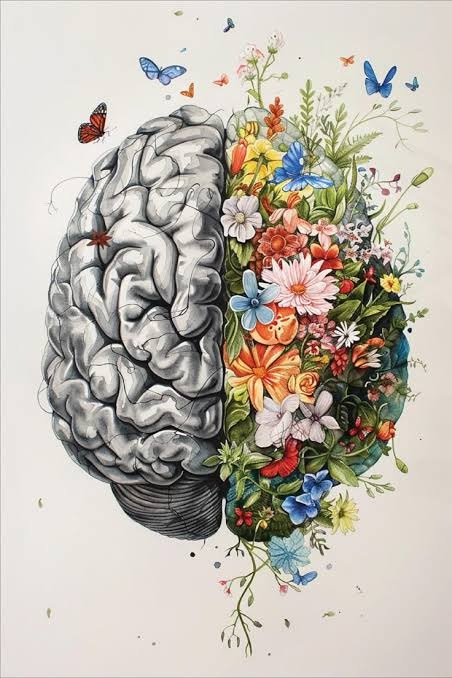
There are parts of this diagnosis that live in silence — symptoms that don’t leave marks, don’t scream for attention, and rarely show up in a blood draw or a clean, tidy chart. They’re the symptoms that slip into my day like shadows. The ones that make me pause, swallow hard, take a breath, and pretend I’m not scared.
People think the scariest part of brain mets is the big stuff — seizures, dramatic changes, emergency moments. And while those fears are real, what haunts me most are the quiet things.
The things I feel but can’t explain.
The things I notice but no one else can see.
The things that make me feel like my brain is slipping through my fingers one small, invisible inch at a time.
These are the symptoms that live between the lines — the ones I wish I could describe perfectly, but even language feels too clumsy for them.
The Pressure That Sits Behind My Eyes Like a Secret
Some days it feels like my brain is swelling against its own walls — a slow, pulsing heaviness that no amount of water, rest, or medication can touch.
It’s not pain.
It’s not a headache.
It’s more like something is pushing outward from the inside, testing the limits of what my skull can hold.
It’s the kind of pressure that makes the world feel slightly tilted.
The kind that makes me blink a second longer, breathe a little deeper, and wonder if this is something I should tell someone — or something I should just survive quietly until it passes.
And how do you explain that?
How do you look at someone and say,
“My head feels heavier than it used to. Something inside me is… pressing.”
without watching their eyes widen in a way that makes you feel even more fragile?
The Fog That Makes My Life Feel Half a Step Off-Beat
There are moments where I feel like I’m watching myself from somewhere outside my body.
Not confused.
Not lost.
Just delayed.
It’s like my brain is running on a slower Wi-Fi connection than the world around me.
People talk, and their words take a second longer to land.
Someone asks a question, and I hear it — but my answer gets stuck in a hallway somewhere between my mind and my mouth.
I walk into a room and completely forget why I came, and it’s not the cute forgetfulness people joke about. It’s the kind that makes your heart stop for a moment.
It feels as if my thoughts are floating just out of reach, like they’ve become fragile glass ornaments I’m scared to drop.
How do you describe something so internal?
How do you tell someone,
“My brain isn’t keeping up with my life today,”
and hope they understand it’s not an excuse — it’s a reality you’re still learning to navigate?
The Sensory Overload That Crashes In Without Warning
Sometimes normal sounds feel too loud, too sharp, too much.
A room that should feel calm suddenly feels like it has 30 radios on at once.
Lights seem brighter.
Movement feels faster.
Voices blend together until they become one overwhelming wall of noise.
It’s strange — sitting in a perfectly ordinary moment while your brain is begging for stillness.
I’ll be in the middle of a conversation, nodding, smiling, pretending I’m keeping up, while inside my head everything feels like a fire alarm that no one else can hear.
And then comes the guilt — the guilt of feeling overwhelmed by life when everyone else seems to navigate it so effortlessly.
The Tiny Slips That Feel Like Earthquakes Inside My Chest
These are the ones that hurt the most because they’re the easiest for other people to dismiss.
The forgotten word.
The misplaced item.
The interrupted thought.
The sentence that dissolves mid-air before I can finish it.
To someone else, it might look normal — just human forgetfulness.
But when you have brain mets, every slip feels like a warning.
Every lapse feels like your body whispering,
Pay attention.
Every forgotten detail feels like evidence that something inside you is changing.
And so you laugh it off.
You shrug.
You call yourself tired.
You pretend you’re fine.
Because what’s the alternative?
Let people see the fear that sits in your stomach every time your mind stutters?
The Fear That Lives Quietly Beneath Every “I’m Okay”
I’ve become good at minimizing things.
At hiding the subtle symptoms.
At acting like I’m completely steady when inside I’m navigating stormy water.
These silent symptoms don’t scream for help — they whisper.
And those whispers follow me into sleep, into conversations, into quiet moments where I let myself imagine the future and feel the weight of uncertainty settle on my shoulders.
I don’t want to panic.
I don’t want to be dramatic.
But I also don’t want to pretend I’m not scared of what these invisible glitches might mean.
Living with brain mets is learning to be aware without being consumed.
Hopeful without being naive.
Honest without falling apart.
It’s a balance no one prepares you for.
Mojo’s POV: “Mom’s Brain Does Weird Stuff, and I’m the On-Call Supervisor.”
Hi. It’s me. Mojo.
Chief Emotional Support Specialist.
Brain-Symptom Monitoring Supervisor.
Treats & Anxiety Management Expert.
Sometimes Mom’s brain gets foggy or tired or wobbly, and I can tell before she even says anything. I sit closer. I stare at her until she notices. I place one paw dramatically on her leg like:
“Don’t worry, I’m clocked in.”
When she forgets something, I pretend I forgot it too.
When she gets overwhelmed, I sit so close she almost trips on me.
When she gets quiet, I make sure she’s not alone.
I don’t know anything about brain mets.
But I know her.
And I’m here.
Always.
Before You Go — A Note From Me to You
If this blog helped you understand something you’ve felt but couldn’t explain — or something your loved one is going through — I’m grateful you’re here.
If you’re new:
✨ Visit the Home Page to read my story and understand why I share all of this.
✨ Check the Resources Page if you or someone you love needs support navigating cancer, finances, or mental health.
✨ And if you want to help keep Mojo & the Mess going — to keep this space alive, to help me continue treatment, and to help me keep writing — you can visit the Keep Mojo and the Mess Going page anytime.
For those who have asked how to support me directly, here’s my Amazon registry:
👉 https://www.amazon.com/registries/gl/guest-view/10QFFEWQ9YHD8
Thank you for reading, for caring, and for showing up in a world where quiet symptoms too often go unseen.
You make this little corner of the internet feel like a place worth coming back to.






Leave a reply to mshibdonssciencelab Cancel reply