
You know that little chart at the doctor’s office?
The one taped to the wall with cartoon faces — smiling at 0, crying at 10 — like pain is something simple. Like it follows rules.
Yeah.
I broke it.
Not because I’m dramatic.
Not because I “don’t tolerate pain well.”
But because when you live inside a body that’s been burned, poisoned, cut open, starved, scanned, and scarred — you lose your baseline. You lose the ability to remember what normal ever felt like.
Pain isn’t a moment for me.
It isn’t an emergency that comes and goes.
It’s a place I live in. A climate. A language my body speaks fluently now, even when I wish it wouldn’t.
What even is a “5” anymore?
Is it the bone pain that makes standing feel like lifting something too heavy for your skeleton to carry?
Is it nerve pain that turns a shirt seam into fire, that makes my skin scream when fabric brushes against it?
Is it the migraines that bloom behind my eyes when medications wear off, or the mouth sores that make soup feel like swallowing knives?
Is it the way my joints grind every time I move, like they’re tired of holding me together?
Or the nausea that flips me inside out until I don’t know which direction relief is supposed to come from?
Or is it just a regular Tuesday — because most of this has become so familiar that I forget it isn’t supposed to be?
I’ve had to teach myself how to function through pain most people would call unbearable.
Not because I’m strong.
Not because I want to be.
But because the alternative is disappearing entirely.
If I cried every time it hurt, I’d never stop crying.
If I stopped every time my body screamed, I’d never move again.
So I don’t stop.
I grit my teeth.
I take the meds.
I learn how to breathe through it.
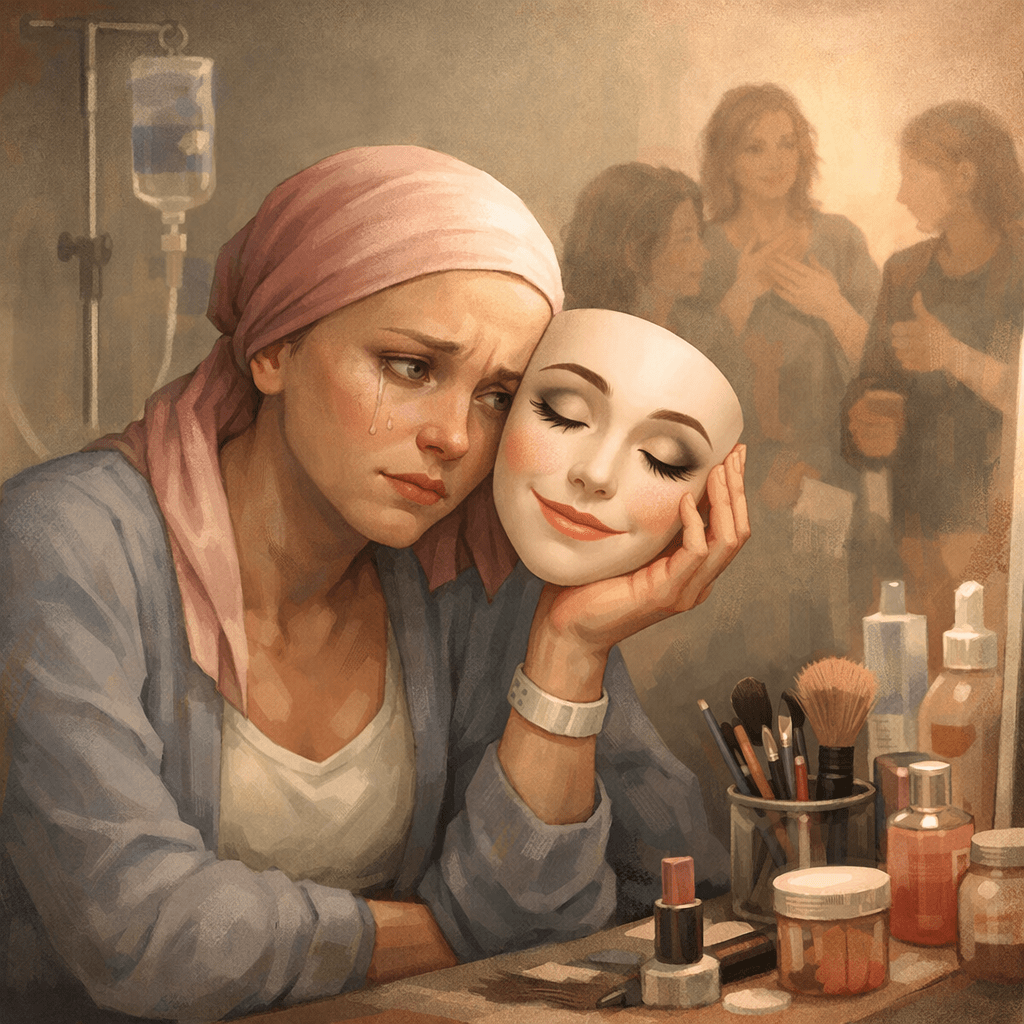
I act normal — because pain is only acceptable to other people when it’s quiet, when it doesn’t interrupt their day.
And just because I look like I’m coping
doesn’t mean I’m not still breaking underneath.
It just means I’ve gotten good at hiding the cracks.
Doctors ask, “What’s your pain, 1 to 10?”
And every time, I hesitate — because I don’t know how to answer anymore.
If 10 is supposed to be “the worst pain of your life,” what do you do when you’ve had fifteen different versions of a 10?
What do you do when the worst thing keeps changing?
When yesterday’s unbearable becomes today’s baseline?
The scale wasn’t built for bodies like mine.
It wasn’t built for chronic pain.
It wasn’t built for layered pain — the kind that stacks and overlaps and never fully leaves.
It wasn’t built for cancer pain.
And sometimes, sitting there in a paper gown, trying to translate my body into a number that fits their system,
it feels like the system itself wasn’t built for me either.
I’ve had nurses tell me I look too calm to be in real pain.
I’ve had doctors brush me off because I smiled through a flare-up.
I’ve had people assume I’m exaggerating — because if it was really that bad, wouldn’t I be screaming?
No.
I’d be ignored faster if I screamed.
So I learned how to shrink it down.
How to make it palatable.
How to say “it’s manageable” even when it’s not — because I need them to listen, not label me difficult.
I learned how to speak about my pain like I’m giving a PowerPoint presentation.
Clear. Measured. Detached.
Because the moment emotion slips in, they call it anxiety instead of truth.
Here’s the part no one likes to hear:
I’m not brave because I push through the pain.
I’m trained to.
Trained by systems that reward endurance and punish vulnerability.
Trained by appointments where disbelief costs you care.
Trained by the quiet understanding that if you want help, you have to make your pain small enough to be believed.
Because the world doesn’t trust people like me when we say,
“I’m hurting.”
From Mojo
You want a scale?
Here’s mine.
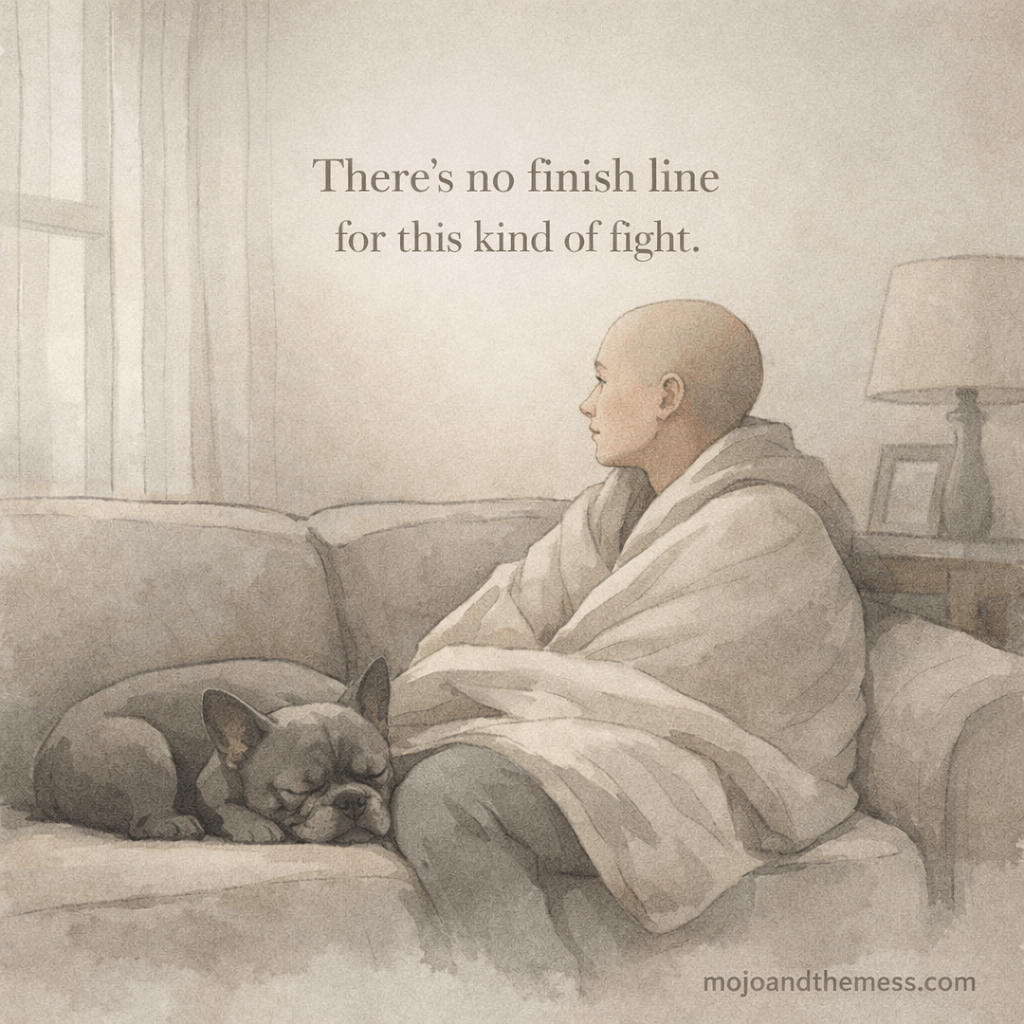
0 — She’s asleep, and I’m snoring beside her.
5 — She flinches when I nudge her with my nose.
7 — She hasn’t moved in hours, and I stay close.
9 — She’s shaking, whispering through it, trying not to wake anyone.
10 — She doesn’t call for help. She goes quiet. That’s how I know it’s bad.
I don’t need a chart.
I don’t need numbers.
I need humans to pay attention.
I need them to stop measuring her pain by how composed she looks,
and start listening to what her body has been surviving.
She’s in pain all the time.
And she still gets up.
She still loves.
She still tries.
So don’t you dare call her dramatic.
— Mojo
If You’re Still Here
If this hit close to home, it’s probably because your pain doesn’t fit neatly into numbers either. Because you’ve learned how to survive quietly. Because you’ve been told you look fine while your body is anything but.
You’re not imagining it.
You’re not weak.
And you’re not alone — even when it feels isolating as hell.
This space exists for people like us. For the ones whose bodies don’t cooperate, whose pain doesn’t perform, whose lives were rerouted without consent.
Stay Connected
You can subscribe at the top of the page to get new posts delivered straight to your inbox.
No fluff. No toxic positivity. Just honest writing, whenever I’m able.
If You’re Able to Support
Keeping Mojo and the Mess going takes time, energy, and resources I don’t always have. If this space has helped you feel less alone and you’re in a position to help sustain it, here are a few ways people do:
Amazon Wishlist https://www.amazon.com/registries/gl/guest-view/10QFFEWQ9YHD8?language=en-US
PayPal Donation https://www.paypal.com/donate/?business=NR39Y7BVRBKRU¤cy_code=USD
There is absolutely no obligation. Reading, sharing, or simply being here matters more than you know.
Thank you for staying in the mess with me. 🖤🐾



Leave a reply to alwayselectronic06c81330f4 Cancel reply