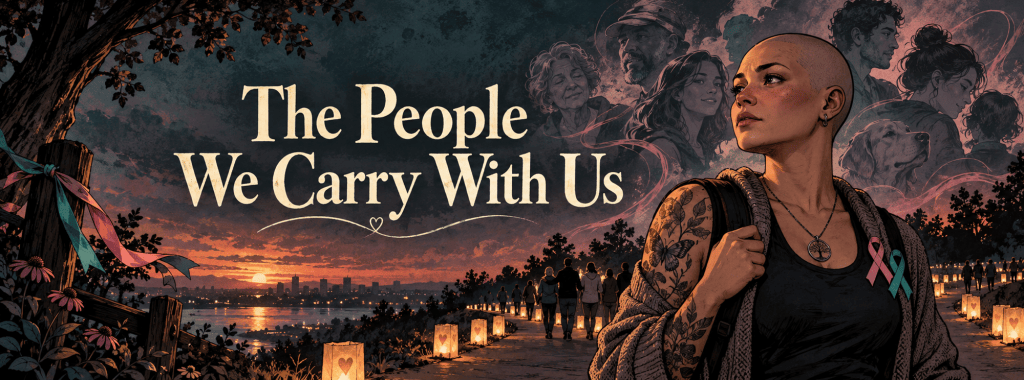

Tomorrow, I’m going to a suicide awareness walk. I’ll be walking for my friends, for my uncle, for the people we’ve lost, and for the people I love who are still trying to make it through days that feel too heavy. I’ll also be walking for the version of me who has struggled with depression and anxiety, and for the times suicidal thoughts became part of my own life.
I don’t take that lightly. I know what it is to look like you’re still moving through the day while something inside you is getting harder and harder to carry. I know depression can make the future feel impossibly small, and anxiety can make even the next hour feel like too much. I know there have been moments when I needed more than someone telling me to stay positive or reminding me how much I have to be grateful for. I needed someone to hear me without making me feel like I had to protect them from the truth.
That is part of why this walk matters to me. I’m not going because I have some neat answer for suicide, or because I believe one conversation can make all the pain disappear. I’m going because people deserve to be remembered, and because people who are still here deserve to be met with care before their pain becomes a story other people tell about them. The people we love are more than the hardest thing they ever felt. And the people who are hurting need to know they can say so out loud.
Suicide touches families and friendships in ways that don’t end when a memorial is over. We carry the person, but we may also carry questions, memories, guilt, anger, love, and all the things we wish we could say one more time. Some losses are impossible to explain in a sentence. Some pain stays private because we don’t know how to talk about it, or because we worry that naming it will make someone uncomfortable. But silence can make people feel even more alone. I want to be willing to talk about this with tenderness, without shame and without pretending I have it all figured out.
I also want to talk about the people who are fighting battles that don’t always get included in suicide awareness conversations: people living with cancer, people with terminal or advanced illness, and the people caring for them. Cancer can take over your calendar, your body, your finances, your independence, your sleep, and the plans you thought you had. There are appointments, scans, treatments, side effects, pain, fear, and the waiting for news. There is grief for the life you had before all of that, and sometimes grief for things you haven’t even had the chance to lose yet.

As someone living with metastatic cancer, I know how much of life can begin revolving around illness. Even when the people around you love you fiercely, you can feel lonely inside what is happening to your own body. You may be trying to manage symptoms while also managing everyone else’s worry. You may feel guilty about the time, money, and energy your illness takes from your family. You may be exhausted from having to make one more decision when all you want is a moment without cancer in the room.

For someone who is terminally ill or living with serious, ongoing suffering, those feelings can become frighteningly heavy. A person might be afraid of what is coming, overwhelmed by pain or loss of control, or unable to see how to keep living inside the circumstances they’re facing. Caregivers can reach their own breaking points, too. They may be terrified of losing someone, worn down by constant responsibility, and ashamed to admit that they are exhausted or struggling. Loving someone does not make a caregiver immune to depression, anxiety, or suicidal thoughts.
We have to be able to hear these truths without shaming people for saying them. We also have to take them seriously. We shouldn’t assume that every person with cancer feels suicidal, or decide that someone’s despair is “just part of the diagnosis.” And we shouldn’t assume we know what someone means when they say they can’t do this anymore. They deserve the chance to explain, and they deserve support from people who understand mental health as part of caring for the whole person. The National Cancer Institute encourages people experiencing emotional distress to tell their care team; oncology social workers, counselors, and palliative care teams may be able to help with emotional and family needs as well as physical symptoms. (cancer.gov, cancer.gov)
If you’re worried about someone, you don’t need a perfect speech. You can sit beside them, listen, and ask what they need right now. If you are worried they may be thinking about suicide, ask them directly and gently. NIMH’s guidance includes asking, staying with the person, helping them connect with support, and following up. (nimh.nih.gov)
And if this is about you, please tell somebody. Tell your friend, your family member, your doctor, your nurse, your oncology team, or someone at the hospital who can help you find support. You do not have to wait until you can explain it perfectly. You can simply say, “I’m scared of where my thoughts are going,” or “I need help getting through today.” The Cancer Support Community’s helpline is 888-793-9355 for people with cancer and their families. (cancersupportcommunity.org)
If you or someone you know is in immediate emotional crisis or thinking about suicide in the United States, call or text 988 to reach the Suicide & Crisis Lifeline. If there is immediate danger, call 911 or go to an emergency department. You don’t have to carry that moment alone. (988lifeline.org, cancer.gov)
Tomorrow, when I walk, I’ll be thinking about the people we miss and the people still beside us. I’ll be thinking about the parts of my own story I didn’t always know how to say out loud. I’ll be thinking about the cancer patients and caregivers who are carrying fear and exhaustion behind the appointments, the brave faces, and the “we’re doing okay” texts.
I can’t promise that words will fix anyone’s pain. I can promise that people deserve to be heard without being judged, and that asking for help does not make them a burden. If you’re still here and struggling, I hope you’ll tell someone. If you love someone who is struggling, keep making room for the honest answer. Sometimes the next step is simply staying close enough for someone to remember they don’t have to face the next hour alone.
If this brings something up for you, support is available:
- Call or text 988 for the Suicide & Crisis Lifeline.
- Cancer Support Community Helpline: 888-793-9355.
- National Cancer Institute: Emotions and Cancer.
- National Cancer Institute: Palliative Care in Cancer.
For more of my writing and cancer resources, visit Mojo & The Mess.







Leave a comment