By Izzy | Mojo & The Mess
One question I get asked a lot is, “How many treatments do you have left?”
And I never really know how to answer that without getting into an entire conversation about stage four cancer.
Because the answer is… I don’t know.
There isn’t a number circled on my calendar. There isn’t a final round scheduled. There isn’t a countdown from eight treatments to zero.
I’m on Enhertu, and the plan is to stay on it for as long as it’s working and my body can tolerate it.
That could be months. It could be years. Nobody can give me an exact answer.
And that’s something I think more people need to understand about metastatic cancer.
Not All Cancer Treatment Has a Finish Line
When most people picture chemotherapy, they picture a pretty specific process.
You get diagnosed. You start treatment. You lose your hair. You feel terrible for a while. You finish your six or eight rounds, maybe have surgery or radiation, and eventually you get to announce that you’re done.
And for some people, that really is how their treatment plan works.
But stage four cancer is a different conversation.
When cancer has metastasized, meaning it has spread beyond where it originally started, treatment is often focused on controlling the disease for as long as possible.
Sometimes that means shrinking tumors. Sometimes it means keeping things stable. Sometimes it means preventing further progression.
And sometimes stable is the best news you can get.
I think that’s a hard concept for people to wrap their heads around.
We are so used to hearing about cancer treatment as something you complete that we don’t always talk about the people who may never be completely finished with it.
We’re still getting infusions while everyone assumes we should be done by now.
We’re still scheduling our lives around oncology appointments.
We’re still dealing with side effects from medication we’ve been taking for months, or sometimes years.
And no, that doesn’t automatically mean the treatment isn’t working.
It can mean the exact opposite.
So, What Exactly Is Enhertu?
Enhertu, also called trastuzumab deruxtecan, is a type of treatment called an antibody-drug conjugate.
That’s a fancy medical term for a medication that combines a targeted antibody with a chemotherapy drug.
The antibody attaches to cancer cells carrying a protein called HER2, and the medication delivers chemotherapy to help destroy those cells.
It’s used for certain breast cancers and other cancers with specific HER2 characteristics.
It’s not your traditional chemotherapy regimen, but it absolutely contains chemotherapy.
And trust me, my body knows it.
For many patients with metastatic cancer, Enhertu is given intravenously every three weeks.
The important part?
For metastatic disease, there usually isn’t a predetermined number of rounds.
The medication is generally continued until the cancer progresses or the side effects become too dangerous or difficult to manage.
That means someone could receive 10 treatments, 20 treatments, 40 treatments, or more, depending on how their cancer responds and how their body handles it.
There is no universal expiration date on the treatment plan.
My Life on a Three-Week Schedule
I started Enhertu in January.
And since then, my life has become a series of three-week cycles.
Treatment. Recovery. A few days of trying to feel somewhat normal. Then right back to treatment again.
Some rounds are easier than others.
Some leave me completely exhausted. Some bring nausea that doesn’t really kick in until a few days later. The metallic taste, the mouth sores, the bone pain, the fatigue that sleep doesn’t fix.
It’s not always dramatic.
Sometimes it’s just being tired of feeling like crap.
Sometimes it’s finally having a good day and realizing I’m already getting close to the next infusion.
And people will say, “You’re still doing chemo?”
Yep.
Still doing chemo.
Still arranging appointments around my life, or more accurately, arranging my life around appointments.
Still having bloodwork. Still watching scans. Still wondering how long this particular medication will remain an option for me.
That’s the part people don’t see.
Why Would Someone Stay on Chemo Indefinitely?
This is probably the biggest misconception I want to clear up.
People sometimes assume that if you’re still receiving chemotherapy, it must mean your doctors haven’t found something that works.
But with metastatic cancer, staying on the same treatment can actually be a good thing.
If a medication is keeping the cancer from growing or spreading, there’s often a very good reason to continue it.
Stopping an effective treatment simply because you’ve reached an arbitrary number of rounds could mean giving the cancer an opportunity to progress.
Of course, every treatment plan is individual. Some patients take breaks, some need dose reductions, and some switch medications because of side effects or changes in their disease.
But for many of us, the goal is to keep a medication working for as long as safely possible.
We don’t keep going because someone forgot to tell us we’re finished. We keep going because controlling the cancer matters.
And that changes how you look at treatment.
Instead of asking how many rounds are left, you’re wondering how many more rounds this medication can give you.
Instead of counting down to being done, you’re hoping the next scan shows that things are still under control.
It’s a completely different relationship with chemotherapy.
The Emotional Side Nobody Really Explains
I’m grateful that medications like Enhertu exist.
I really am.
But gratitude and exhaustion can exist in the same body.
I can be thankful for another treatment option and still absolutely dread walking into the infusion center.
I can appreciate what this medication may be doing for me and still hate what it does to my body.
I can want more time and still be frustrated by how much of that time cancer treatment takes up.
And I think people need to understand that none of those feelings cancel each other out.
There is something emotionally exhausting about having no finish line.
With a traditional treatment plan, you can count down.
Four more rounds. Three more. Two more. Last one.
You have something concrete to look toward.
With ongoing metastatic treatment, you’re not necessarily counting down.
You’re counting on the medication continuing to work.
And that’s a very different kind of hope.
Because as much as I want Enhertu to keep doing its job, I also know that one day my treatment plan could change.
Not necessarily tomorrow. Not necessarily anytime soon.
But that’s part of living with metastatic cancer.
You learn to appreciate stability while knowing nothing about this disease is guaranteed.
Please Stop Asking When We’re Going to Be Done
I don’t mean that people can’t ask questions.
I’d actually rather people ask than make assumptions.
But I wish more people understood that cancer doesn’t always follow the storyline they’re familiar with.
Not every patient is working toward a final infusion.
Not every clear or stable scan means treatment stops.
Not every person who looks healthy is in remission.
And not everyone receiving treatment year after year is getting worse.
Some of us are living our lives while actively treating cancer.
We’re going to work. We’re writing books. We’re planning events. We’re grocery shopping, laughing with friends, making appointments, and trying to figure out what to cook for dinner.
And then we’re going back to the infusion center.
That doesn’t mean our lives have stopped.
It means treatment has become part of how we’re able to keep living them.
What I Wish More People Understood About Stage Four
I think there’s still this huge disconnect between what people think metastatic cancer looks like and what it actually looks like.
Some people imagine someone constantly hospitalized or too sick to function.
Others see us out living life and assume everything must be better.
The reality is somewhere in the messy middle.
I can be having a great day and still have stage four cancer.
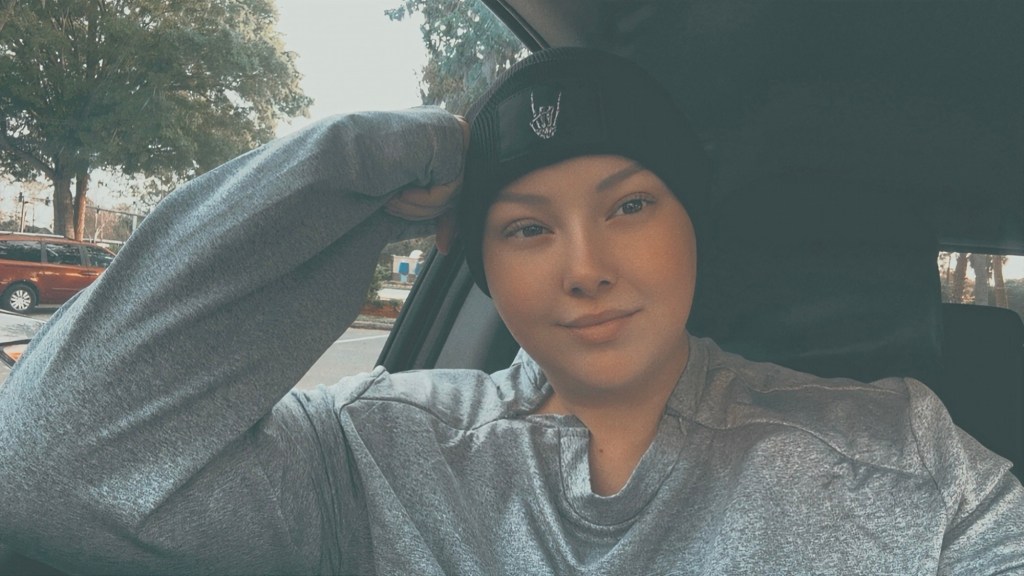
I can look completely fine in a picture and still be dealing with treatment side effects.
I can plan something months in advance while having absolutely no idea what my treatment schedule or scans will look like by then.
And I can be excited about the future without pretending my diagnosis isn’t serious.
That’s the thing about metastatic cancer.
You learn to make room for uncertainty without letting it take up every inch of your life.
I don’t know how many Enhertu treatments I’ll receive.
I don’t know whether I’ll be on it six months from now or two years from now.
What I do know is that, right now, this is the treatment plan I’m following.
And as long as it remains an effective and tolerable option, I’ll keep having those conversations with my oncology team and making the decisions that make sense for my health and quality of life.
Because that’s what this is really about.
Not just more days on a calendar.
But having days worth living.
There Isn’t Always a Bell to Ring
I think we need to make more room in cancer conversations for the patients who don’t have an end date.
The ones who are on treatment number 27 instead of number seven.
The ones who have been sitting in infusion chairs for years.
The ones who celebrate a stable scan because it means they can stay on the medication they’re currently receiving.
The ones who aren’t waiting for a final treatment, but are hoping their current treatment keeps working.
We deserve to have our stories told, too.
Because cancer treatment isn’t always a temporary chapter.
For some of us, it’s an ongoing part of life.
And if you’re someone living with metastatic cancer and wondering whether anyone else understands how strange and exhausting that feels, I promise you’re not the only one.
We’re out here.
Still showing up. Still making plans. Still trying to live beyond our next scan.
And sometimes, that’s what life with stage four cancer looks like.
Not eight rounds and done.
Just hoping the treatment keeps giving us more life to live.
A Little More About Mojo & The Mess
If you’re new here, welcome to the mess.
Mojo & The Mess is where I share the parts of living with cancer that don’t always make it into the awareness campaigns. The treatment, the side effects, the mental health, the awkward moments, the good days, and everything in between.
But there’s more here than just my blog.
- The Blog: Real, unfiltered writing about cancer, treatment, and life outside the hospital.
- Resources: Financial assistance programs, support organizations, and other resources for patients and caregivers. I’m always accepting suggestions for new resources to add.
- Keep Mojo & The Mess Going: Ways to support the website, community projects, and the work happening behind the scenes.
- My Books: Life’s a Mess and Before the Flowers Die, available on Amazon.
If something here helps you feel a little less alone, consider subscribing so you don’t miss future posts.
And if you know someone who doesn’t understand why a loved one is still receiving treatment months or years after diagnosis, please share this with them.
Sometimes a little understanding goes a long way.
Read more, explore the resources, and subscribe at:
My books:
Life’s a Mess: https://a.co/d/04bKvB5r
Before the Flowers Die: https://a.co/d/0gvPvBC2
Mojo & The Mess — because life doesn’t stop being messy just because you have cancer.




Leave a Reply